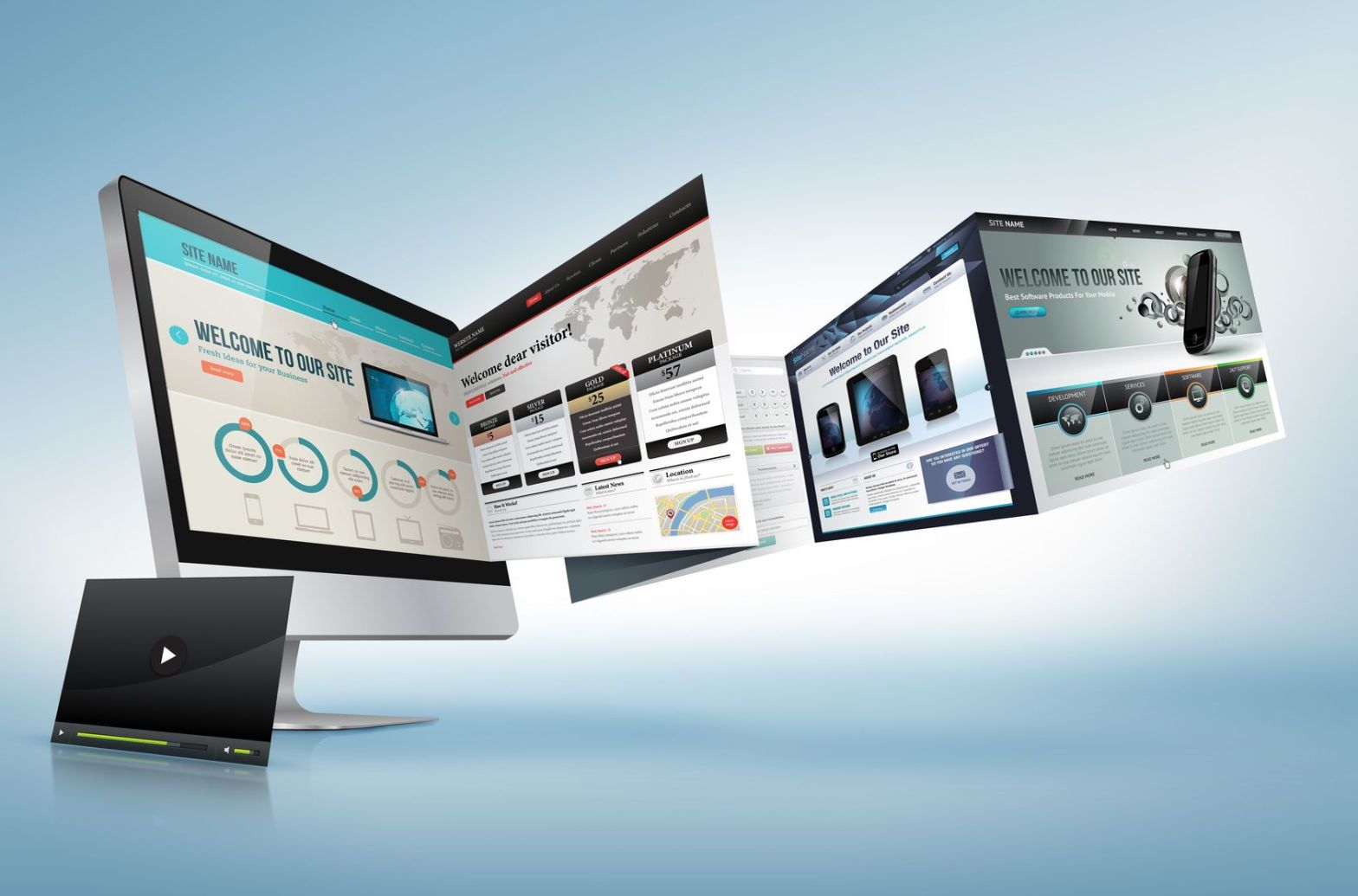
Having a website is a must today. For your brand to be successful in the network of networks, you need a well-structured website that meets your business’s personality, with your needs and those of your customers.
Since it is not only enough to be on the Internet, but you have to apply the appropriate strategies so that the Internet begins to work for you and not against you.
That’s why we’re explaining what a website is in this post, and above all, we’ll tell you how it will benefit your company.
The website, what is it?
Before seeing the benefits, we have to give a little review to the definition of a website.
Surely you have seen the term web page as a synonym for web site; It is quite common, and although they have a lot to do with reality, they are not the same.
What is the difference between a website and a web page?
In short, we have that websites are a set of web pages that are related in one way or another, and which can be accessed through the Internet. They can also be known as a portal or website in English.
And the website, what is it?
The web page is a document adapted to the World Wide Web, which can have information in text, images, videos, music, and other multimedia types. The same is known as an electronic page or web page in English.
And what is the World Wide Web?
The World Wide Web (www by its initials) is where all the world’s websites are intertwined with each other, and which we can access through the Internet.
To exemplify these concepts, we will use our Aloha website: the website would be the entirety of our internet space, and this specific blog entry would be one of its many pages.
In the same way, there are other concepts that you should take into account for the theme of websites, for example:
- Web server: It is the one that hosts websites —with all their information— on a computer.
- Search engines: The one that searches for files on web servers. A very clear example is Google and Yahoo.
- URL: It means Uniform Resource Locator, and it is the unique address used to access information on the Internet.
- HTML: It is the acronym for HyperText Markup Language, and it is the language used on the Internet to format documents.
- Domain name: It is the unique name that identifies a website.
The types of websites
Now that you know what a secure website is, you are wondering how it should be ideal for your business.
For example, there are many types of websites: a blog, landing page, wiki, download site, auction site, news, institutional, community, database, policy, education, among others.
Therefore, below we will explain the main ones, so you can see which is the one that best suits the needs of your brand.
And you may even need a more specific web design, in which you combine several characteristics of each one.
1. E-commerce sites
Also known as e-commerce sites, they are those that directly offer products to their customers through the use of web pages.
In this way, people can use a virtual cart to select everything that interests them and then buy it by credit card or with services such as PayPal.
If you have a business of clothing, shoes, electronic devices, or anything tangible, you may want to have a site of this type, because this way you can have a greater reach by being able to send your products.
A recommendation for e-commerce pages is that they show very detailed photographs of the product, with information on measurements, colors, and everything necessary for the user to feel safe.
In addition, the idea is that you have a page of the site where you can solve the problems and doubts of your customers.
Looking for professional web development services, web development company provide you best services related to web development, social media marketing , SEO.
2. Brand sites
You probably already know branded sites, as your business site may belong to this type of website.
Brand websites are virtual spaces where such brands create and maintain part of their image, where they offer information and other content of value for their clients and potential clients.
These websites generally have pages where they talk about the brand’s values and philosophy, a contact page, services, and products, among others.
3. Blogs
Blogs on the Internet are an example that there are things that always work.
This does not mean that you have to stay stuck in the blogs of 10 years ago, but rather that you have to use these tools while we evolve and adapt to trends.
Blogs today offer many possibilities. They can be very valuable spaces for internet users who want to share content with the world.
And for brands, it is an opportunity to get closer to their potential customers, generate leads while humanizing their image.
 DIGITOLOGY